
Korean Lessons ᚛ Level 9 - Advanced Korean #2 (Lessons 241 to 270) ᚛ Lesson 243 - Whether you do it or not in Korean [-(으)나 마나]
Whether you do it or not in Korean [-(으)나 마나]
The expression -(으)나 마나 puts a verb side by side with its negation, 말다, "not to do": "whether you do it or not". It is used to say that the action will make no difference to the outcome, either because the outcome is known in advance (보나 마나 뻔하다, "no need to look, it’s obvious") or because the action has no effect (약은 먹으나 마나 효과가 없다, "whether I take the medicine or not, it does nothing"). In that sense it is close to -아/어 봤자, but it stresses the pointlessness of the action itself.
"No need to check" with 보나 마나, 물어보나 마나
[Verb]-나 마나 after a vowel (verbs ending in ㄹ drop the ㄹ: 살다 → 사나 마나), [Verb]-으나 마나 after a consonant
In its most common use, the expression is built with a verb of checking, 보다, "to look", 물어보다, "to ask", 확인해 보다, "to check", 먹어 보다, "to taste", and announces a certain outcome: the rest of the sentence is a supposition, with 뻔하다, "to be obvious", -(으)ㄹ 거예요, -(으)ㄹ 겁니다. 보나 마나 works almost like an adverb, "for sure", "it’s a foregone conclusion".
그렇게 공부를 안 했는데 시험 점수야 보나 마나 뻔하지.
→ With how little you studied, no need to look at your score, it’s a foregone conclusion.
하필 내 앞에서 차 사고가 나다니. 오늘은 보나 마나 지각일 거야.
→ Of all things, a car accident right in front of me. I’m going to be late today, that’s for sure.
재현아, 너 그 영화 봤어? 독립운동가 이야기라니 보나 마나 슬플 거야.
→ Jaehyun, have you seen that movie? It’s the story of an independence fighter, so it’s bound to be sad, no need to watch it to know.
명절에 고향으로 내려가는 기차표는 물어보나 마나 매진일 겁니다. 최소한 한 달 전에는 예매해야 했어요.
→ No need to ask, train tickets home for the holidays are bound to be sold out. You had to book at least a month in advance.
- 크리스마스 날인데 오빠랑 데이트 안 해?
→ It’s Christmas, aren’t you going out with your boyfriend?
- 응, 물어보나 마나 올해도 가족들이랑 보낸다고 할 거야.
→ No, no point asking him, this year again he’ll say he’s spending it with his family.
엄마가 만든 잡채라니! 이건 먹어 보나 마나 맛있을 거예요.
→ Japchae made by Mom! No need to taste it, it’s going to be delicious.
"It’s no use" with -(으)나 마나
Learn more
Exercises
Learn more
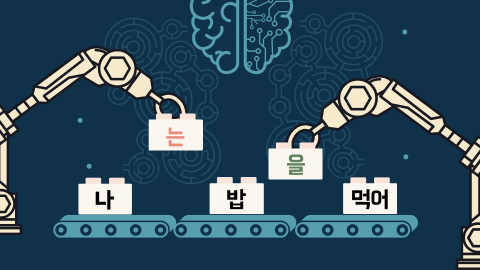
Particles are omnipresent in Korean. They indicate the role of words in a sentence, nuance meaning, and make it possible to understand who does what, where, how, and why.
Particles are also often the aspect that causes the most difficulty for Korean learners. In grammar books, they are usually presented in the middle of long sentences, with complex vocabulary, without being clearly highlighted.
With Korean Particles, we made the opposite choice:
taking the time to explain each particle, one by one, using very simple sentences, accessible even to beginners.